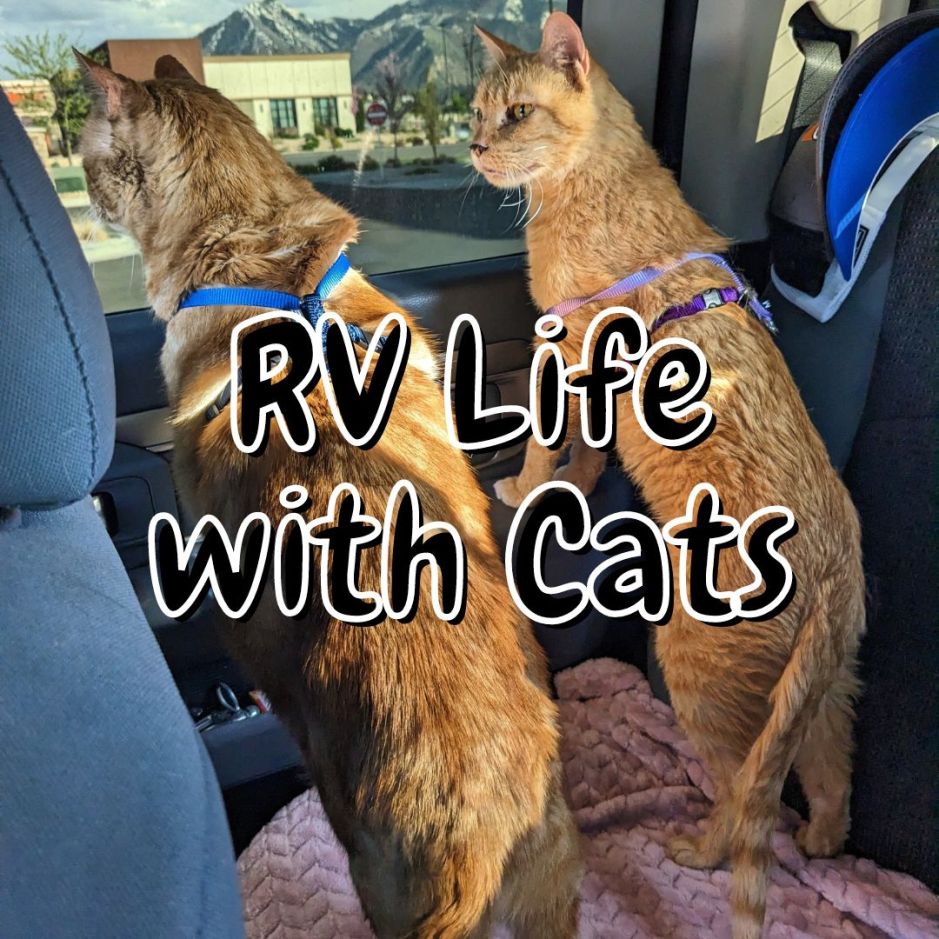
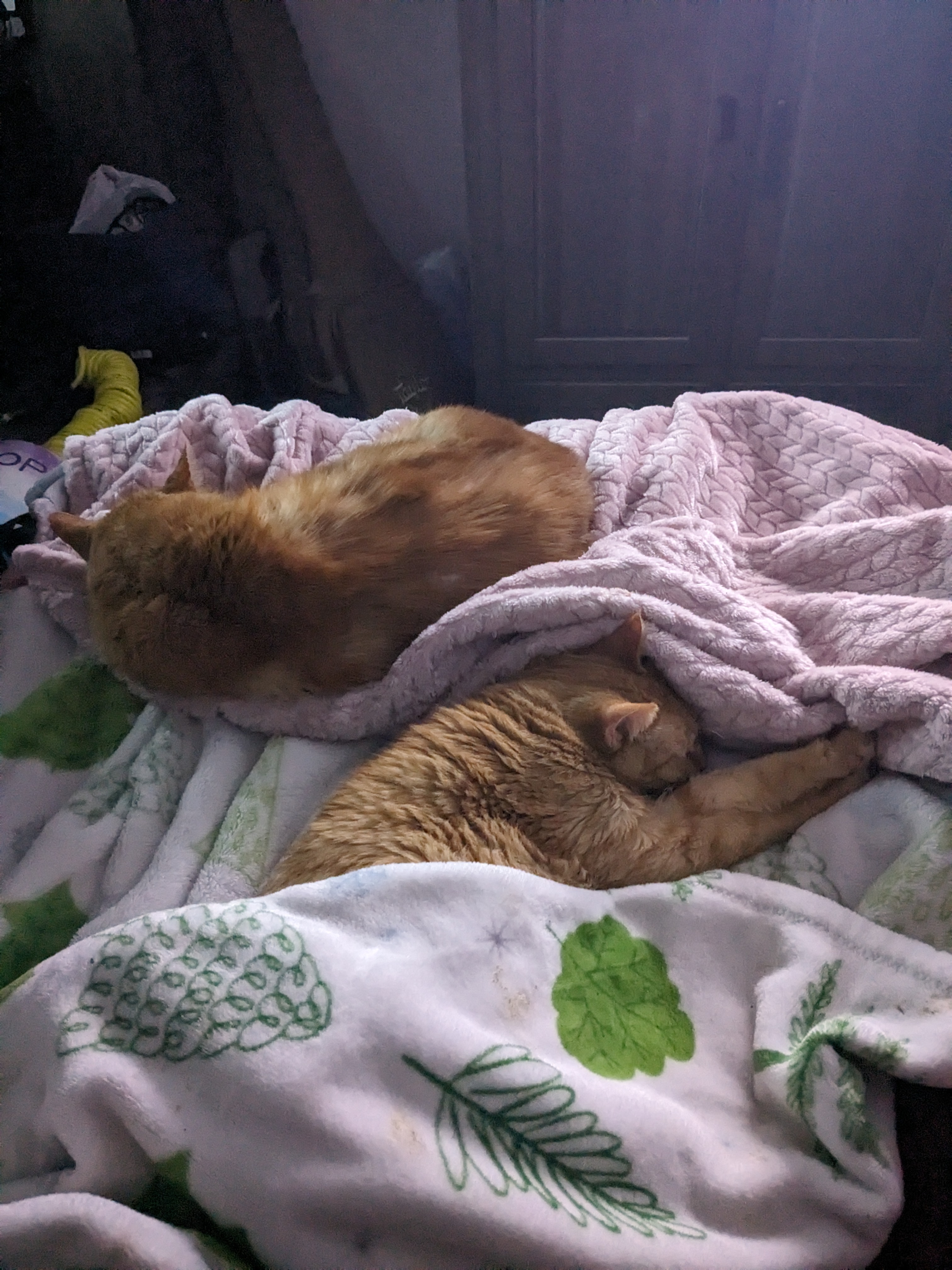
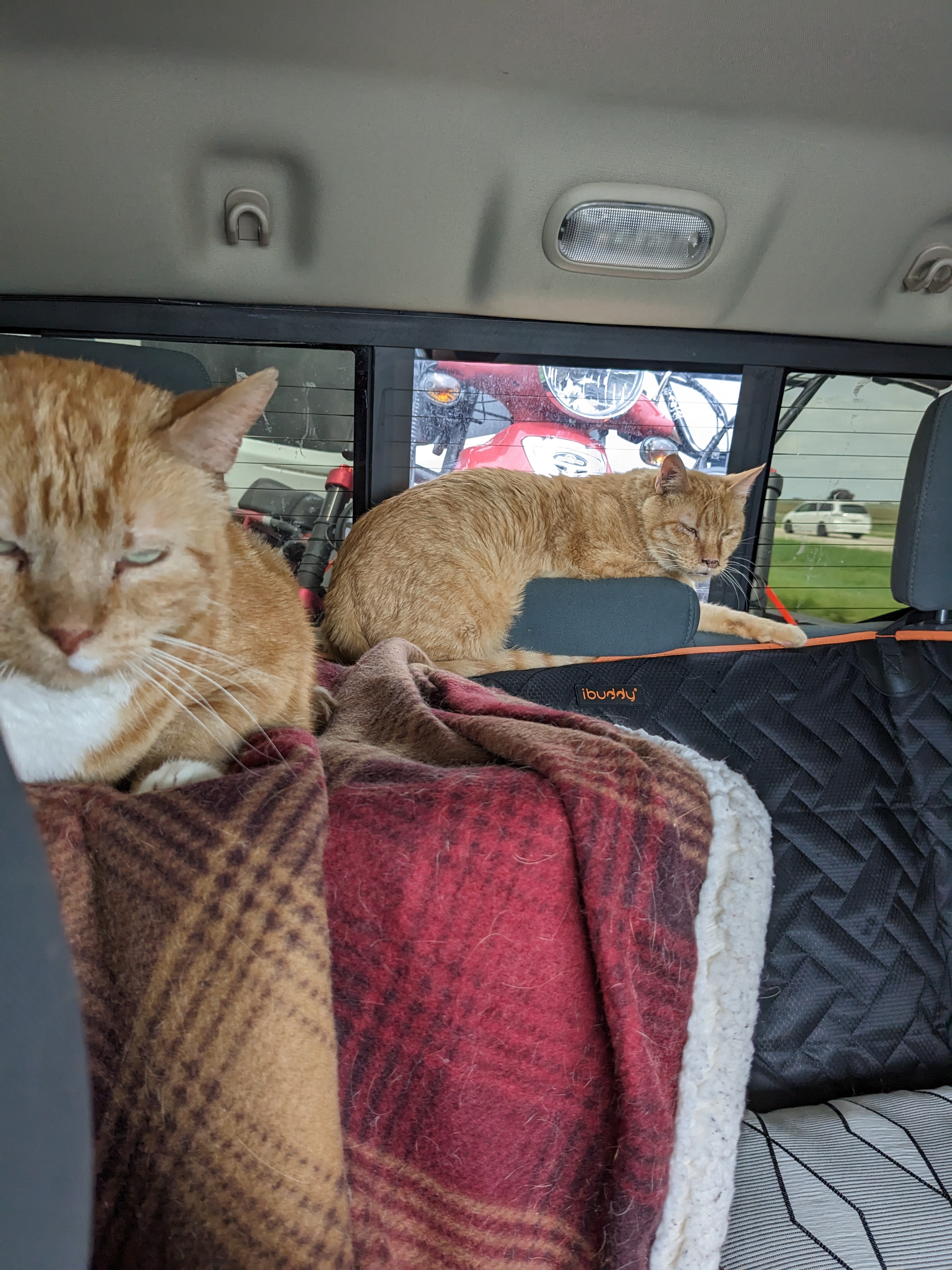
If you’ve followed me on instagram or seen my YouTube videos, you’ve definite seen my two orange tabbies that call our camper home. The smaller one is Ducky, but she more commonly goes by Baby, Loaf, Dumdum, Cheeto Puff, and Spitty Baby. She’s 4 years old, and we adopted her in June 2021 after we moved to Utah. She loved to cuddle, sleep with her tongue out, and lay on your neck like a scarf. The bigger one is Mario, but he goes by Chonk, Chonky Boy, and Costco Rotisserie Chicken. He’s a little old man at the age of 7 and a half, and we adopted him in July 2022 after I went to buy food only and walked out with food and a cat.
Travel days
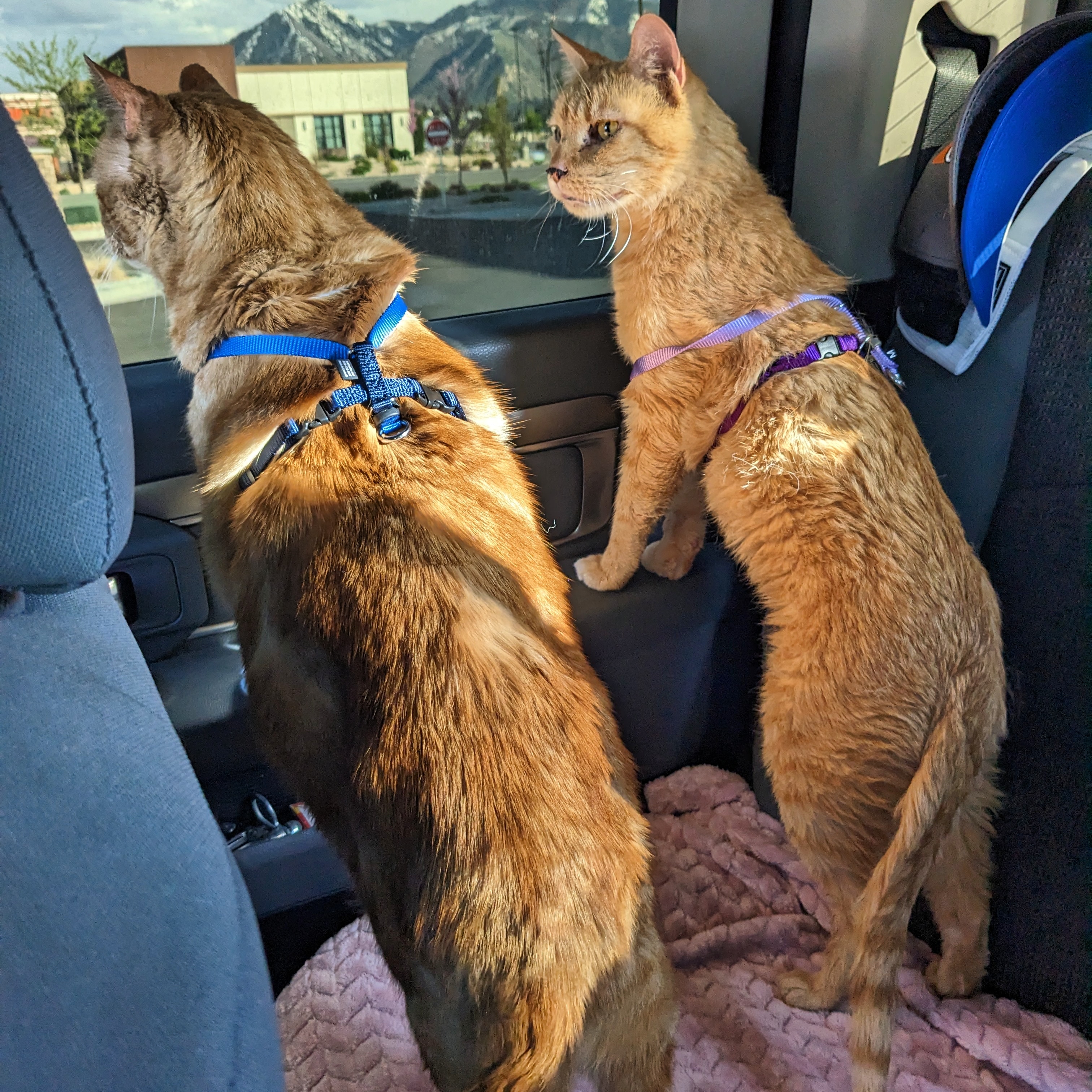
Chonk was a great adventure cat from the beginning. He liked car rides, exploring outside the camper, sitting in his cat tent, and even walking in the snow! For travel days, we put his harness on and carry him to the truck. Once we’re ready to move, the harness comes off so he can roam as he pleases. The Baby was a different story. She was NOT having it in the truck, but she has gotten much better! Here’s how we got her comfortable in the truck:
- Starting off slow: we first tried her harness on inside the camper for a few hours at a time before we ever took her outside. She’s a runner, so if your cat is like her, you want to make sure that harness is secure. I gave her some treats I like to call her “sleepy treats,” which are just some anxiety treats for pets. I got them from PetSmart after doing tons of research. I’d give her 30 minutes or so after eating the treats before putting her harness on. This definitely helped in the beginning when she was getting used to the harness going over her head.
- Introducing the truck: once her harness wasn’t scary anymore, we started taking her into the truck. For the first few times, we didn’t even turn it on. We placed her in the truck with us and sat there while she roamed. Then she graduated to sitting in the truck with it turned on but not moving. After that step, we’d drive around the block a few days a week with her to get her comfortable. We did all of this in the months before we started traveling full time.
- Treats: plenty of treats were used to coax her into the truck. We would (gently) toss her into the truck, but she got treats before, during, and after the excursion. And plenty of cuddles.
- Introducing the crate: we learned soon after introducing her to the truck in a harness that a crate may be better for her needs. I found a crate on Amazon for a small dog, so it’s quite roomy for a small cat. We started out with the crate open in the camper with her favorite blanket inside so she could explore as she pleased. Now, we put her in the crate to carry her to the truck as she seemed to fight less. I think it was because she knew she was contained and couldn’t fall, jump, etc. Once in the truck and ready to move, we open the door to the crate for her to roam freely. Sometimes she goes back in to lay on her blanket, and usually she goes back in when she knows we’ve stopped somewhere. We do close her in the crate whenever we need to open the truck doors because she is very fast and is a flight risk.
Our cats can handle up to 6 hour travel days (longest we’ve been with them so far), but we prefer to keep in under 5 hours and with a lunch break if it’s over 3 hours. We tend to stop in Walmart parking lots for lunch because we can push the slides out and toss the cats in to let them use the bathroom, eat, and hydrate. I’ve tried bringing food and water with us on travel days, but they don’t seem to want anything other than treats. They’ll eat the treats no problem though! If you’re worried about accidents, I’d recommend getting seat covers for the back seats and bringing a litter box with you. We don’t bring the litter box, but we do have the back seat covers, just in case.
Cat-friendly RV
Since we moved into the RV with cats, we were prepared to make a few modifications to accommodate litter boxes, feeders, and anything else they needed.
The biggest modification we made was adding cat doors to the bathroom door and the closet door where their litter box is housed. I found extra large cat doors on Amazon to make sure the Chonk would fit through them. I was going to buy a second one for the closet door, but we ended up using the back of the one I already had for the bathroom door instead.
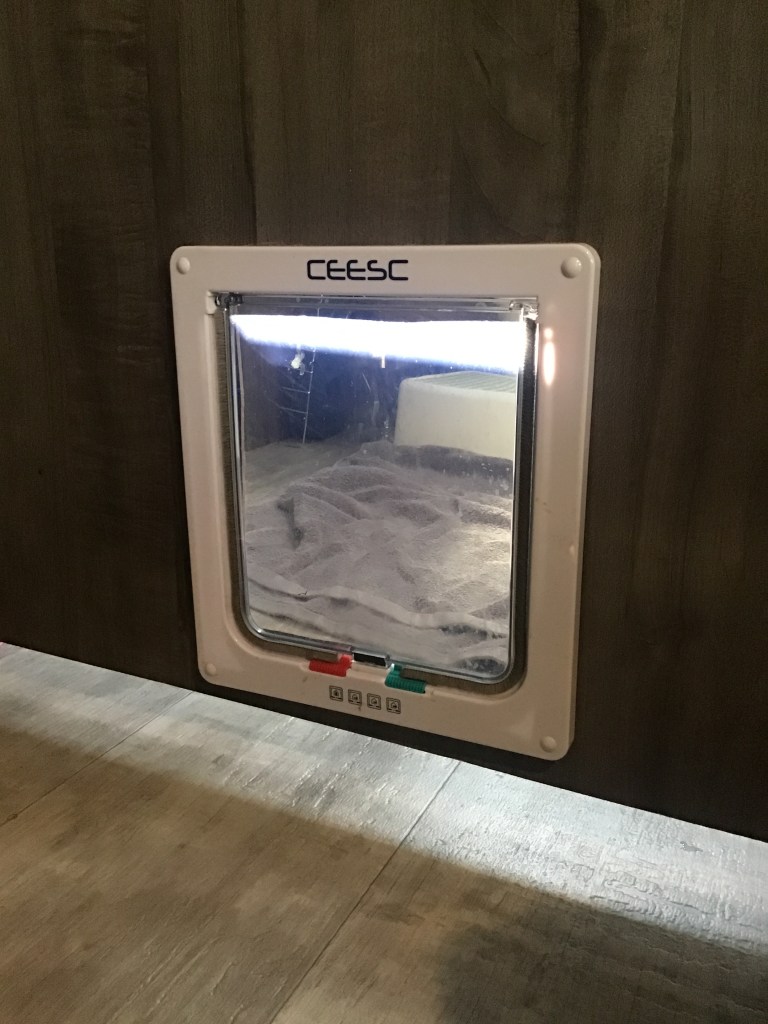
The bathroom closet houses the litter box, extra food, and one of the two feeders. The cats access this area through the hole we cut in the door.
Their litter box pads, pellets, treats, and medicine (for Chonk’s allergies) lives in the towel closet. The rest of their stuff is scattered around the camper. The other feeder is in the living area closer to their water fountain. We bought a scratching pad to hopefully get Chonk to stop scratching the furniture (it worked), and we applied some sticky tape to the couch in the meantime to deter scratching (which also worked). Their extra toys, harnesses, and leashes live in the organizers we added to the fronts of our cabinet doors near the main door.
Conclusion
Is RV life with pets troublesome? I’d say no, personally. We have enough space for us and the cats to happily live in the camper, even if Chonk attacks your feet. Even if the Baby sneezes on me every chance she gets. I wouldn’t trade RV life with pets for the world. If you’re training your cats for travel, definitely go slow with it. I’m happy to answer any questions about the topic below in the comments!
 anxietyinacamper
This was a great read – and your cats are adorable!
LikeLiked by 1 person
Thank you!!
LikeLiked by 1 person